

Role of insurance in car rentals explained for international tourists in Javea: types of coverage, legal needs, costs, and tips for peace of mind.
Booking a rental car for your vacation in Javea often seems simple, but choosing the right insurance can feel overwhelming. Travelers from outside Spain face distinct requirements and options that affect both peace of mind and the total cost of their trip. This guide highlights car rental insurance coverage and offers clear solutions, helping you avoid unnecessary expenses and confusion when protecting yourself against accidents and unexpected damages.
Table of Contents
- What Insurance Means for Car Rentals
- Types of Car Rental Insurance Explained
- Legal Requirements for Renting Cars in Spain
- How Insurance Protects Renters and Companies
- Costs, Exclusions, and Common Pitfalls
Key Takeaways
| Point | Details |
|---|---|
| Understanding Insurance Options | Familiarize yourself with the types of rental car insurance, such as Collision Damage Waiver and Liability Coverage, to mitigate financial risks. |
| Review Existing Benefits | Check your personal auto insurance and credit card benefits before purchasing additional rental coverage to avoid unnecessary expenses. |
| Know Legal Requirements | Ensure compliance with local laws, especially regarding mandatory insurance and documentation when renting cars internationally. |
| Be Aware of Costs and Exclusions | Investigate potential fees and common exclusions in rental agreements to avoid unexpected charges during your rental experience. |
What Insurance Means for Car Rentals
Car rental insurance serves as a critical financial protection mechanism when traveling, shielding you from potentially devastating expenses related to vehicle damage or accidents. When renting a vehicle in Javea or anywhere internationally, understanding your insurance options can save you significant stress and unexpected costs.
Rental car insurance typically encompasses several key coverage types that protect you from different financial risks:
- Collision Damage Waiver (CDW): Covers damage to the rental vehicle in case of accidents
- Liability Coverage: Protects against third-party property damage or bodily injury claims
- Personal Accident Insurance: Provides medical coverage for you and passengers
- Personal Effects Protection: Safeguards personal belongings inside the rental vehicle
Understanding car rental insurance options requires carefully evaluating your existing personal auto insurance and credit card benefits. Many travelers don’t realize their current policies might already provide substantial rental car coverage, potentially saving them from purchasing redundant protection.
When determining your insurance needs, consider multiple sources of potential coverage. Your personal auto insurance policy might extend to rental vehicles, while some credit cards offer complimentary rental car insurance when you use them to book. International rentals often have unique requirements, so verifying your specific coverage becomes even more critical.
Here’s a quick comparison of where you might find car rental insurance protection:
| Source of Insurance | Typical Coverage | Common Limitations | Extra Considerations |
|---|---|---|---|
| Rental Company | Full suite, often premium-priced | May exclude personal belongings | Easy to purchase at booking |
| Personal Auto Policy | Usually covers third-party liability | May not cover all countries | Check with your insurer first |
| Credit Card | Often covers collision damage | Requires payment with card | Coverage varies by card type |
Carefully review your existing insurance policies before assuming you need additional rental car coverage.
Pro tip: Always request a detailed breakdown of insurance options directly from your rental car provider and ask specific questions about what is and is not covered under each plan.
Types of Car Rental Insurance Explained
Understanding the various types of car rental insurance is crucial for protecting yourself financially during your vacation. Car rental insurance coverage encompasses multiple layers of protection designed to shield you from potential financial risks associated with vehicle rentals.
The primary types of car rental insurance include:
- Collision Damage Waiver (CDW): Protects against damage to the rental vehicle
- Liability Coverage: Covers damages to third-party property or injuries
- Personal Accident Insurance: Provides medical expense coverage for you and passengers
- Personal Effects Coverage: Safeguards personal belongings against theft or damage
- Supplemental Liability Protection: Extends legal liability coverage beyond standard limits
Each insurance type serves a specific purpose in mitigating potential financial risks. Collision Damage Waivers typically cover repair costs if you damage the rental vehicle, while Liability Coverage protects you from legal claims if you cause an accident that damages other vehicles or injures other people.
Not all insurance policies are created equal – carefully review the specific terms and conditions of each coverage option.
Understanding your existing personal auto insurance and credit card benefits is essential before purchasing additional rental car insurance. Many travelers don’t realize their current policies might already provide substantial coverage, potentially saving them from unnecessary expenses.
Pro tip: Always request a detailed written explanation of insurance coverage from your rental car provider and photograph or document the vehicle’s condition before driving off the lot.
Legal Requirements for Renting Cars in Spain
Renting a car in Spain involves navigating specific legal requirements that protect both drivers and rental companies. Vehicle rental regulations mandate several important documentation and insurance standards that international travelers must understand before hitting the road.
Key legal requirements for car rentals in Spain include:
- Mandatory Documentation:
- Valid driver’s license from home country
- Passport or national identification card
- International driving permit (for non-European Union travelers)
- Insurance Requirements:
- Compulsory Third-Party Liability Insurance
- Minimum legal coverage for property damage
- Medical injury protection for potential accidents
Understanding the nuanced legal landscape is crucial for international travelers. Third-Party Liability Insurance is not optional in Spain – it’s a legal requirement designed to protect all road users from potential financial damages resulting from vehicular accidents.
Spanish law requires comprehensive documentation and insurance verification before vehicle rental.
Additional legal considerations involve age restrictions, driving history requirements, and specific regional regulations that might impact your rental experience. Some rental companies impose additional requirements beyond the national legal minimums, such as minimum driving experience or maximum age limits.

Pro tip: Photograph and digitally backup all rental documentation and insurance papers before leaving the rental office to ensure you have proof of coverage in case of unexpected incidents.
How Insurance Protects Renters and Companies
Insurance serves as a critical safety net for both car rental customers and companies, creating a protective financial framework that mitigates risks and potential losses. Insurance mechanisms create a balanced approach that ensures both parties can navigate potential challenges with confidence and security.
The protection mechanisms benefit both renters and companies in several key ways:
-
For Renters:
- Limits out-of-pocket expenses during accidents
- Provides legal protection against liability claims
- Covers medical expenses from potential injuries
- Reduces financial stress during unexpected incidents
-
For Rental Companies:
- Protects vehicle assets from potential damage
- Manages financial risks associated with rentals
- Provides legal and financial coverage for incidents
- Ensures business continuity during unexpected events
Comprehensive insurance transforms a potentially catastrophic financial situation into a manageable scenario. By clearly defining responsibilities and coverage limits, insurance policies create transparency and security for both parties, reducing the potential for disputes and unexpected financial burdens.
Insurance is not just a financial product, but a mutual protection agreement between renters and companies.
The intricate balance of insurance protections ensures that both renters and companies can approach car rentals with confidence, knowing that potential risks are systematically managed and mitigated through well-structured insurance frameworks.
Pro tip: Always carefully read and understand the specific terms of your rental insurance, asking detailed questions about coverage limits and potential exclusions before signing any agreements.
Costs, Exclusions, and Common Pitfalls
Navigating car rental insurance requires a keen understanding of potential financial complexities and hidden risks. Insurance policy exclusions can create unexpected financial challenges for unsuspecting travelers if not carefully examined.
Key cost considerations and common insurance pitfalls include:
-
Cost Ranges:
- Basic coverage: $30-$60 per rental
- Comprehensive protection: $100-$200 weekly
- Additional driver fees: $10-$25 per day
-
Common Exclusion Categories:
- Intentional damage
- Illegal activity-related incidents
- Damages outside specified geographical zones
- Wear and tear
- Personal property losses
Administrative fees can significantly inflate unexpected costs. These hidden charges might include loss of use fees, diminished value assessments, and processing expenses for damage claims, which can catch renters off guard.
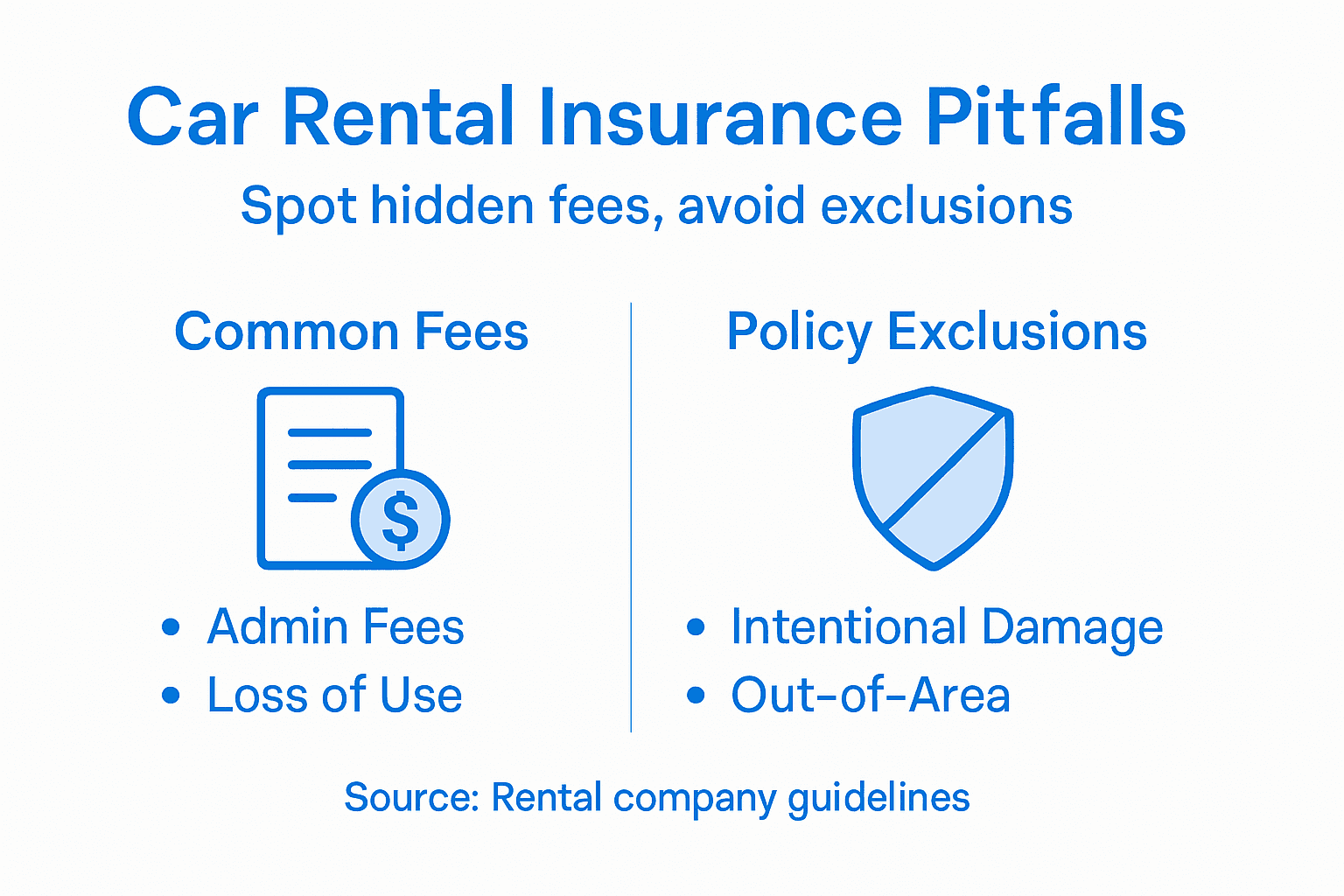
To better understand possible financial risks, see the breakdown of common hidden fees in rental car insurance:
| Fee Type | What It Means | Typical Cost Range |
|---|---|---|
| Loss of Use | Compensates rental during repairs | $20-$50 per day |
| Diminished Value | Covers reduced resale value after damage | $100-$300 per claim |
| Processing Fees | Handles admin for damage claims | $20-$75 per claim |
Understanding policy details prevents financial surprises during car rentals.
Renters should meticulously review their existing personal auto insurance and credit card benefits before purchasing additional rental coverage. Many travelers unknowingly duplicate insurance protection, spending unnecessary money on redundant policies.
Pro tip: Request a detailed, written breakdown of all potential fees and exclusions before finalizing your rental agreement, and carefully photograph the vehicle’s condition before driving off the lot.
Protect Your Javea Car Rental with Trusted Insurance and Service
Navigating the complexities of car rental insurance can be overwhelming. From understanding Collision Damage Waivers to verifying Third-Party Liability coverage, you deserve a rental experience that prioritizes your peace of mind without hidden fees or confusion. At Natalies Rent a Car, a family owned company in Javea Alicante Spain, we specialize in providing reliable vehicles paired with clear and honest insurance options so you can protect your vacation and enjoy every moment.
Explore our Offers – Natalies to find rental packages designed for transparency and trust. Avoid common pitfalls by choosing a company that respects your time and safety. Ready to experience worry-free rental service backed by comprehensive support Visit Natalies Rent a Car now and reserve your ideal vehicle. For useful tips and news, check our Uncategorized – NataliesRentaCar-Reliable Cars. Honest Prices category and prepare for your trip with confidence.
Frequently Asked Questions
What types of insurance are typically included with car rentals?
Rental car insurance generally includes Collision Damage Waiver (CDW), Liability Coverage, Personal Accident Insurance, Personal Effects Coverage, and Supplemental Liability Protection. Each type provides specific financial protections during your rental period.
Do I really need additional insurance for renting a car if I have personal auto insurance?
It’s essential to check your existing personal auto insurance policy, as it may already cover rental vehicles. Many travelers find they have sufficient coverage already, which could save them from purchasing additional insurance at the rental counter.
What are common exclusions in car rental insurance policies?
Common exclusions include intentional damage, incidents related to illegal activities, damages outside specified geographical zones, wear and tear, and personal property losses. Knowing these exclusions helps prevent unexpected financial burdens.
What fees should I be aware of that may arise during car rentals?
Be aware of potential administrative fees like loss of use fees, diminished value charges, and processing fees, which can inflate your expenses. It’s recommended to request a detailed breakdown of all potential fees before finalizing your rental agreement.
Recommended
- Car Hire Terms Explained: Avoid Hidden Fees
- 7 Smart Car Rental Travel Hacks for Javea Family Vacations – NataliesRentaCar-Reliable Cars. Honest Prices
- Car Rental Pricing Explained: What Impacts Your Costs – NataliesRentaCar-Reliable Cars. Honest Prices
- 7 Budget Car Rental Tips for Families Visiting Javea