
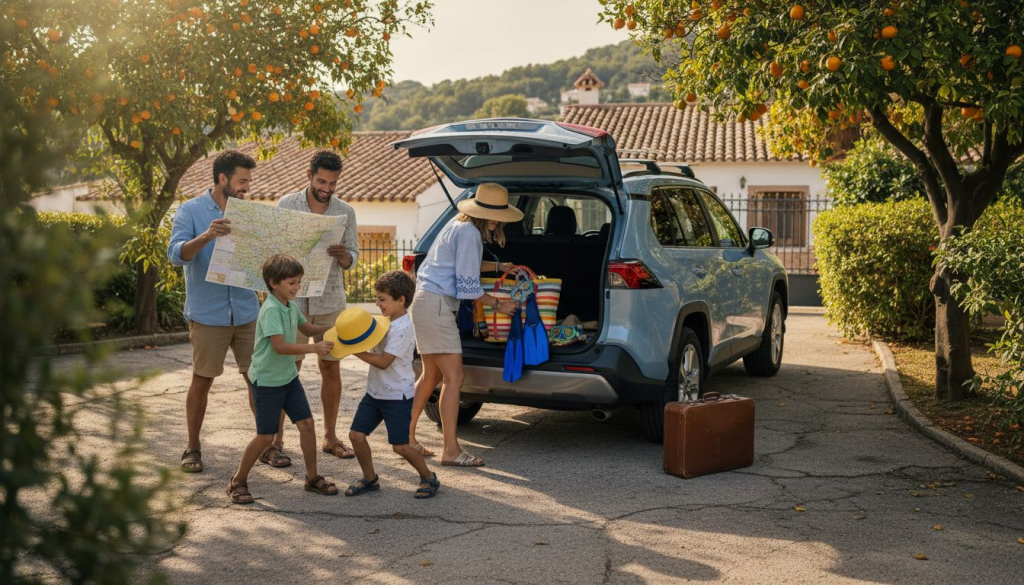
Learn how to choose best rental car for your family trip to Javea. Follow this step-by-step guide for reliable, affordable, child-friendly rentals and local tips.
Every parent faces that moment when planning a trip to Javea becomes more than just choosing a destination. Making travel comfortable and safe for children takes careful thought, especially when searching for a rental car that will fit your family and support your Spanish adventure. From finding a vehicle with proper child car seats to understanding local driving rules, this guide helps you secure a reliable rental, keep kids happy, and discover the best travel tips for exploring Alicante together.
Table of Contents
- Step 1: Assess Family Travel Needs
- Step 2: Compare Car Rental Options
- Step 3: Evaluate Child Safety and Comfort Features
- Step 4: Verify Rental Conditions and Insurance
- Step 5: Confirm Booking and Prepare for Local Travel
Quick Summary
| Key Insight | Explanation |
|---|---|
| 1. Assess family travel needs | Count passengers and luggage, including child seats. Choose a vehicle that fits everyone comfortably for the Javea trip. |
| 2. Compare rental options carefully | Create a detailed comparison of rates, mileage, and fees. Ensure transparent pricing to avoid unexpected costs. |
| 3. Prioritize child safety features | Confirm availability of appropriate car seats and safety features. Ensure comfort measures are in place for a stress-free ride. |
| 4. Understand rental contract terms | Read the rental agreement thoroughly. Know your insurance coverage, fuel policies, and mileage restrictions before signing. |
| 5. Prepare for local driving | Familiarize yourself with the vehicle and local traffic laws. Organize essential documents and confirm navigation tools before driving away. |
Step 1: Assess family travel needs
Before you book a rental car, take time to understand what your family actually requires for your Javea vacation. This step prevents frustration and ensures you select a vehicle that fits your group, not just any available option.
Start by counting your passengers and their ages. If you’re traveling with young children, you’ll need to factor in child car seats or booster seats, which take up significant space. Infants and toddlers require dedicated seating that cannot be removed, so budget for that when evaluating vehicle size.
Next, consider your trip duration and daily travel patterns. Are you planning day trips to nearby coastal towns, or will you be exploring further inland? Research on household car availability and travel behavior shows that families with longer travel distances often prefer larger vehicles with better fuel efficiency.
Here are the key factors to evaluate:
- Number of adults and children in your group
- Whether car seats or booster seats are needed (and how many)
- Luggage volume for a week or two-week vacation
- Planned routes and terrain (coastal roads, mountain passes, city driving)
- Fuel efficiency preferences and budget constraints
- Comfort features like air conditioning and USB charging ports
Think about cargo space realistically. Beach trips mean towels, swimwear, and snorkeling gear. City exploration means strollers, diaper bags, or shopping bags from local markets. A typical family vacation generates more belongings than you’d expect.
Consider ground clearance and vehicle height if you’re concerned about narrow European streets or parking in compact spots. Larger SUVs and minivans handle luggage racks and roof boxes well, though some smaller Javea parking areas challenge bigger vehicles.
Here’s how vehicle type selection affects your family travel experience:
| Vehicle Type | Advantages | Limitations |
|---|---|---|
| Compact Car | Easy to park, lower cost | Limited luggage space, may feel cramped |
| Standard Sedan | Balanced comfort and efficiency | Trunk space may be tight |
| Minivan | Seats many, lots of cargo space | Harder to maneuver, higher rental cost |
| Large SUV | Extra power, spacious interior | Challenging in tight city streets |
| Wagon/Station Car | Flexible loading, better handling | Less headroom than minivans |
Families traveling with multiple children and car seats benefit most from spacious vehicles like minivans or larger SUVs that accommodate safety requirements without cramping passenger comfort.
Also think about your driving comfort level. If someone in your group is anxious about driving in Spain, a smaller, easier-to-maneuver vehicle might reduce stress. Conversely, if you’re tackling mountain roads to Aitana or Valencia, more power and stability become valuable.
Pro tip: List your family’s specific needs before contacting rental companies, then ask about vehicles with proven child-seat compatibility and recent model years, which typically offer better safety features and climate control for Mediterranean heat.
Step 2: Compare car rental options
Now that you understand your family’s needs, it’s time to evaluate what rental companies actually offer. This step ensures you’re comparing apples to apples and spotting hidden costs before you commit.
Start by identifying which companies operate in Javea and checking their availability for your travel dates. Not all rental agencies offer the same vehicle selection, pricing structures, or family-friendly policies. Some specialize in small economy cars, while others focus on larger family vehicles.
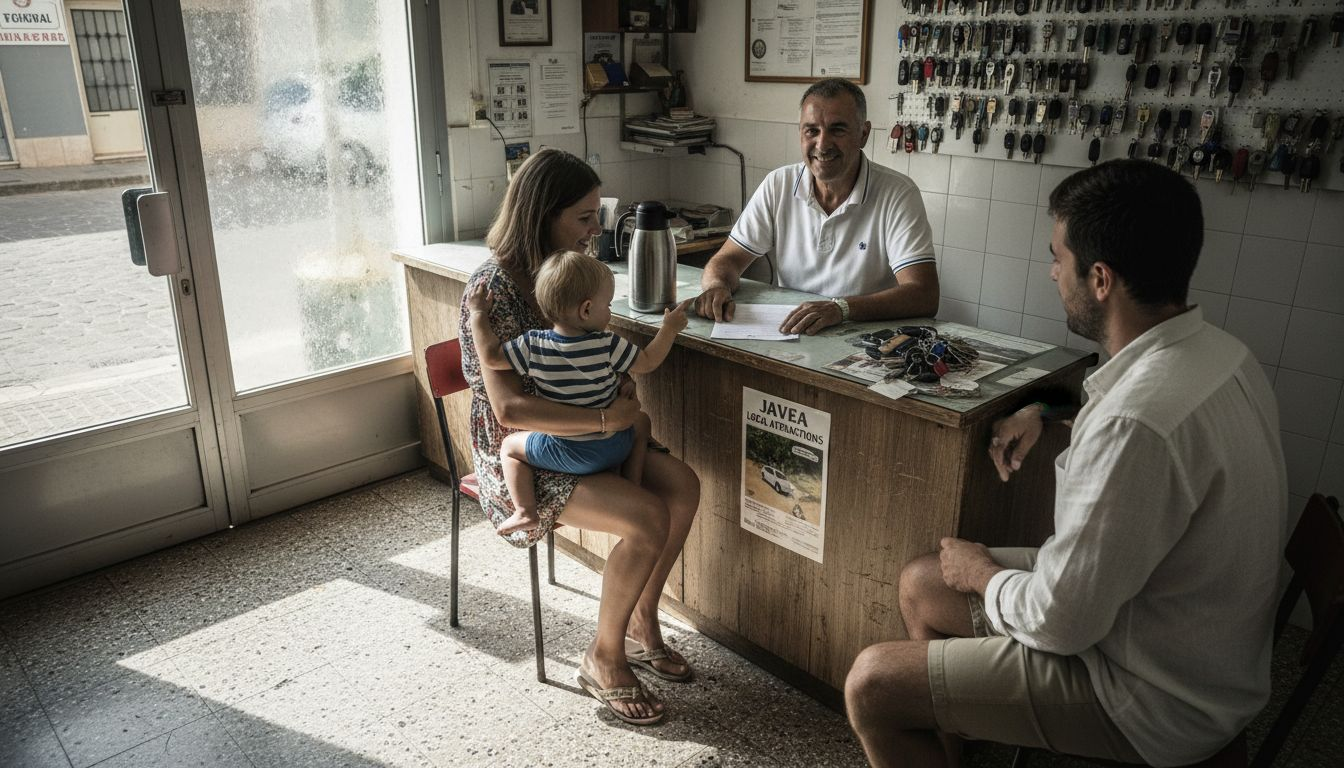
Create a comparison spreadsheet or use a simple notepad to track key details from each company. Write down the base rental rate, mileage allowances, insurance options, and any fees for additional drivers or child seats. Pricing varies significantly based on season, so booking during shoulder months can yield better rates than peak summer travel.
Here’s what to compare across options:
- Daily or weekly rental rates for your preferred vehicle type
- Mileage policies (unlimited versus per-kilometer charges)
- Insurance coverage levels and deductibles
- Child seat availability and rental fees
- Fuel policy (full-to-full, prepaid, or other arrangements)
- Additional driver fees and age restrictions
- Cancellation and modification policies
When researching pricing, check whether government car rental programs apply to your situation, as they sometimes offer discounted rates and waived fees for eligible travelers. Even if you don’t qualify, understanding what discounts exist helps you negotiate or find comparable alternatives.
Look beyond just the headline price. Some companies advertise low daily rates but charge substantial fees for things like airport pickups, fuel surcharges, or young driver premiums. Read the fine print carefully. A slightly higher base rate with fewer hidden fees often beats an attractive headline number.
Below is a quick summary of common car rental fees and what they cover:
| Fee Type | What It Covers | Tips to Minimize Cost |
|---|---|---|
| Additional Driver Fee | Covers more than one driver listed | Add only necessary drivers |
| Child Seat Rental | Provides car/booster seat for kids | Bring your own if allowed |
| Fuel Surcharge | Refueling by rental company | Return car with full tank |
| Insurance Add-ons | Extra coverage for accidents/theft | Check credit card for coverage |
| One-way Drop Fee | Different pickup and drop-off points | Return to same location if possible |
Call or email companies directly with your specific requirements. Ask about vehicle types available for family trips that match your needs, confirm child seat compatibility, and inquire about any current promotions. Personal communication reveals details that websites sometimes obscure.
The cheapest option rarely accounts for all costs, so compare total expenses including insurance, fuel, and fees rather than focusing solely on the daily rental rate.
Pay attention to customer reviews, especially from other families. Look for comments about vehicle condition, staff helpfulness with children, and whether the company delivered what was promised. Real experiences from people in similar situations provide valuable insights.
Pro tip: Book directly with local rental companies rather than international aggregators, as they often provide better rates for extended family rentals and can accommodate specific requests like high-capacity vehicles with proven car seat installations.
Step 3: Evaluate child safety and comfort features
Child safety in a rental car goes far beyond just having seats available. You need to verify that the vehicle offers proper restraint systems and comfort features designed for young passengers during your Javea vacation.
Start by understanding what your children actually need based on their ages and sizes. Appropriate car seats and booster seats depend on developmental stage, so infants require rear-facing seats while toddlers need forward-facing harnesses with proper support. Older children transition to booster seats until standard seat belts fit correctly across their lap and chest.
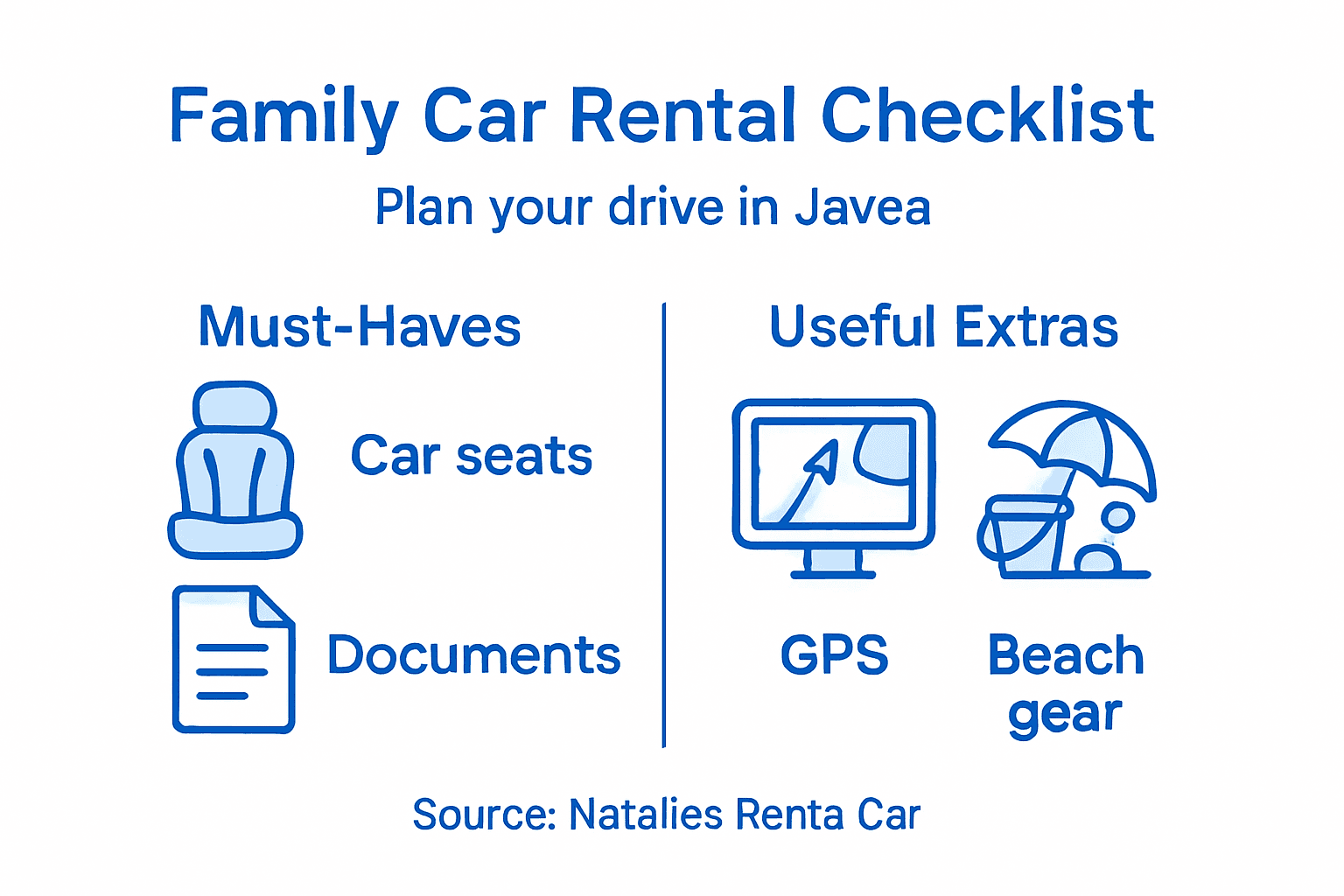
Contact your rental company before booking and explicitly ask about child seat availability for your specific vehicle choice. Request seats that match your children’s ages and weights. Some companies charge rental fees for seats, while others include them at no cost. Confirm the seat models they provide meet current safety standards and won’t require additional adapters.
Key safety features to verify in your rental vehicle:
- Functioning seat belts in all seating positions
- Working child safety locks on rear doors
- Rear seat positions that accommodate car seats properly
- Climate control to manage Mediterranean heat during summer travel
- Good visibility for monitoring children from the driver’s seat
- Headrests and adequate cushioning for long drives
When you pick up the rental car, test everything before leaving the lot. Install car seats if you brought your own, and verify they’re secure. Check that seat belts work smoothly, air conditioning functions properly, and child locks engage on rear doors. A few minutes of testing prevents frustration later.
Consider comfort features that make longer drives tolerable for children. USB charging ports help keep tablets or phones powered for entertainment. Adequate window shading reduces glare and heat. Cup holders prevent spilled drinks. Air conditioning isn’t optional in Javea’s summer climate.
For rear passengers, think about legroom for children to stretch during multi-hour drives to Valencia or inland villages. Minivans and larger SUVs excel here, while compact cars can feel cramped for families with multiple kids.
Children in the back seat until at least age 13 remain safest and most comfortable during European travel, so prioritize rear-seat quality and spacing when selecting your rental.
Ask the rental company about their safety testing and vehicle maintenance schedules. Recently serviced vehicles with current inspections offer greater reliability and reduce the risk of mechanical issues disrupting your vacation.
Pro tip: Request a vehicle inspection report and take photos of the car’s interior condition upon pickup, noting any damage, so you’re protected against false damage claims when returning the rental at trip’s end.
Step 4: Verify rental conditions and insurance
Before you sign the rental agreement, take time to understand exactly what you’re agreeing to. Insurance coverage, fuel policies, and usage restrictions directly impact your budget and legal protection during your Javea trip.
Start by reading the rental contract carefully, even the small print. EU consumer rights ensure transparency in rental conditions, so companies must clearly disclose mandatory third-party insurance, fuel policies, mileage limits, and cross-border restrictions. Don’t sign anything you haven’t fully understood.
Focus on these critical contract elements:
- Third-party liability insurance coverage (mandatory in Spain)
- Collision damage waiver or decline option
- Personal effects coverage for luggage and belongings
- Fuel policy (full-to-full, prepaid, or return-as-is)
- Mileage limits and per-kilometer overage charges
- Cross-border travel permissions and restrictions
- Cancellation and modification fees
- Damage deductibles and excess amounts
Understand what’s already included in your base rental price. Third-party liability insurance comes standard with Spanish rentals, but collision coverage often requires additional payment. Some companies bundle multiple insurance types, while others sell them separately. Know the difference between what’s included and what’s optional.
Ask about fuel policies explicitly. Some rentals require you to return the car with a full tank or face inflated fuel charges. Others let you return it partially full. Understand the policy upfront so you’re not surprised at checkout.
If you’re planning day trips beyond Javea to places like Benidorm, Valencia, or inland areas, confirm the rental permits cross-border travel within Spain. Some rental agreements restrict where you can drive or charge extra fees for traveling certain distances from the rental location.
Review insurance protection options for your rental to understand coverage limits and what damage scenarios your policy covers. Decline unnecessary add-ons, but don’t skip essential protection, especially with children in the vehicle.
Get a clear written summary of your rental terms before pickup. Request a copy of the contract to review at your leisure rather than rushing through details at the counter. If anything seems unclear, ask the rental agent to explain it.
Rental contracts often hide significant fees in terms most travelers overlook, so take 10 minutes to review coverage options and usage restrictions before committing.
Confirm the condition of the vehicle before accepting it. Walk around the car with the rental agent and document any existing damage with photos. This protects you from being charged for damage you didn’t cause.
Pro tip: Request a detailed written summary of your insurance coverage, deductibles, and what activities or situations are excluded, then photograph it on your phone for reference in case questions arise while driving in Spain.
Step 5: Confirm booking and prepare for local travel
With your rental car selected and terms verified, it’s time to finalize your booking and prepare yourself for driving in the Javea area. This step ensures you arrive at pickup with everything organized and ready to explore.
Contact the rental company one final time to confirm your reservation details. Verify the vehicle type, pickup date and time, location, and all agreed-upon pricing and insurance options. Request written confirmation via email so you have documentation if any questions arise. Double-check that child seats are reserved if you requested them.
Gather your essential documents before arrival. You’ll need your valid driver’s license, passport, and a credit card for the rental deposit. Many companies require an International Driving Permit if your license is from outside Europe, so verify this requirement when you confirm your booking. Having documents organized prevents last-minute stress.
Prepare for Spanish driving by reviewing local traffic rules and road conditions. Consider downloading offline maps of the Javea region and nearby areas you plan to visit. Research parking options in towns you’ll explore, as European city centers often have limited parking and narrow streets challenging for larger vehicles.
Here’s what to have ready at pickup:
- Valid driver’s license and passport
- Credit card for rental deposit and authorization
- Booking confirmation and rental agreement
- Insurance documentation and policy details
- Contact information for the rental company
- Mobile phone with offline maps and translation apps
- Sunglasses and sunscreen for Mediterranean driving
- Child seats if bringing your own, or confirmation they’re reserved
Understanding rental car checklists and inspection procedures helps you avoid overlooking critical details at pickup. Walk around the vehicle with the agent, photograph any existing damage, and test all essential features before driving away.
Familiarize yourself with the vehicle’s controls before hitting the road. Locate the fuel door, windshield wipers, headlights, and climate controls. Adjust mirrors and seats for comfortable driving. Know where emergency equipment is stored.
Plan your first day’s route carefully. Don’t attempt complex navigation or long distances immediately after picking up the car. Give yourself time to adapt to the vehicle, adjust to driving on the right side of the road if you’re from a left-side driving country, and understand local traffic patterns.
Spending 10 minutes familiarizing yourself with vehicle controls at pickup prevents confusion and potential accidents while navigating unfamiliar Spanish roads.
Set up your phone’s navigation before you depart the rental location. Program your accommodation address and any key destinations you’ll visit. Having directions ready eliminates distracted driving and keeps children informed about travel plans.
Pro tip: Take photos of the rental agreement, insurance documents, and vehicle condition report on your phone, then email them to yourself, so you have backup copies accessible anywhere during your trip without carrying bulky paperwork.
Find the Perfect Family Rental Car with Natalies Renta Car
Choosing the best rental car for your family trip to Javea is a challenge that requires attention to passenger space, child safety features, and clear rental terms. You want a vehicle that fits everyone comfortably, ensures child seat compatibility, and offers stress-free driving on Spanish roads. At Natalies Renta Car, we understand these key pain points and provide reliable, family-friendly options with transparent pricing and flexible policies designed for your peace of mind.
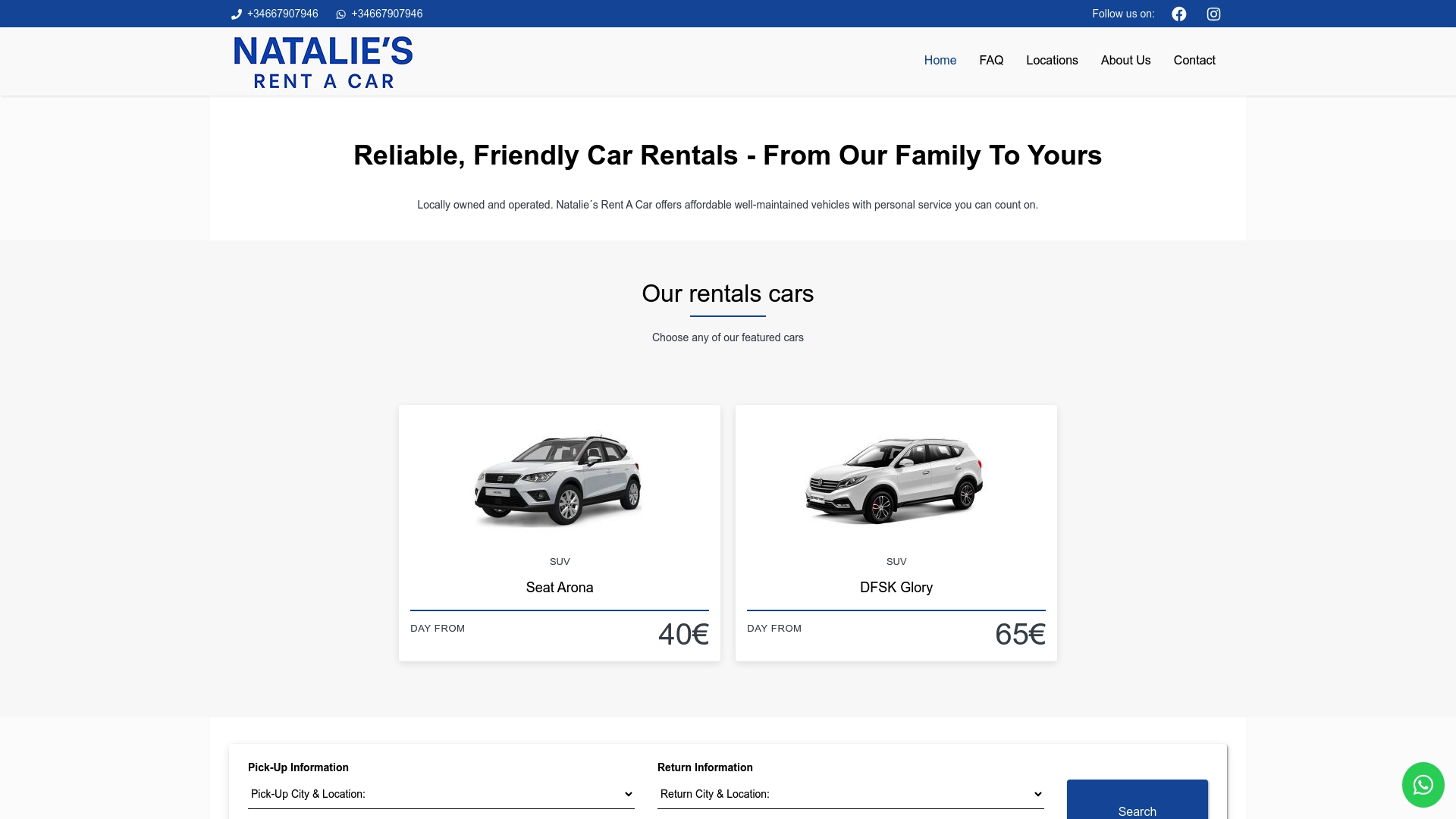
Explore our selection tailored for families on our Uncategorized – NataliesRentaCar-Reliable Cars. Honest Prices page where quality meets honest pricing. Don’t miss valuable savings available on our Offers – Natalies. As a family owned rent a car company in Javea Alicante Spain, we prioritize your comfort and safety so you can focus on making memories. Visit https://nataliesrentacar.com now to secure a rental that meets your unique family travel needs and enjoy stress-free adventures starting the moment you arrive.
Frequently Asked Questions
How do I assess my family’s travel needs before booking a rental car in Javea?
To assess your family’s travel needs, consider the number of passengers, their ages, and any luggage or equipment like child car seats. List these factors and think about your planned routes to choose a vehicle that fits comfortably.
What should I compare when evaluating different rental car options for my family trip?
When evaluating rental options, compare daily rates, mileage policies, insurance coverage, child seat availability, and any additional fees. Create a simple spreadsheet to track these details for clarity before making a decision.
How can I ensure that the rental car is safe and comfortable for my children?
To ensure safety and comfort for your children, verify that the vehicle has proper seating systems, functioning seat belts, climate control, and adequate space. Contact the rental company ahead of time to ask about the specific child seats they provide and ensure they meet safety standards.
What should I know about rental conditions and insurance before signing a rental agreement?
Before signing the rental agreement, carefully read the terms, focusing on insurance coverage, fuel policies, and mileage limits. Understand what is included in the base price and request a written summary of your insurance options to avoid any surprises later.
How can I prepare for driving in Javea once I’ve finalized my rental car booking?
To prepare for driving in Javea, gather essential documents like your driver’s license and passport, and confirm your reservation details with the rental company. Familiarize yourself with local traffic rules, plan your driving routes, and ensure you have navigation tools ready before pickup.