

Discover essential steps before car rental in Javea. Learn about required documents, insurance, vehicle checks, and hidden charges prevention.
Hidden fees and surprise damage claims can sour any vacation in Javea, especially when renting a car is supposed to make exploring Alicante effortless. Handling these risks the right way starts before you even leave the rental lot. By focusing on a thorough pre-rental inspection and clear documentation, you can enjoy peace of mind and avoid costly misunderstandings. Discover how a few smart steps and a documented inspection checklist become your best defense against extra charges.
Table of Contents
- Understanding Pre-Rental Car Checks
- Types of Rental Agreements and Vehicles
- Required Documents and Legal Requirements
- Insurance Options and Coverage Details
- Hidden Fees, Common Pitfalls, and What to Avoid
Key Takeaways
| Point | Details |
|---|---|
| Pre-Rental Inspection is Crucial | Conduct a thorough inspection of the vehicle to document its condition and avoid unexpected damage charges. |
| Understand Your Rental Agreement | Different rental agreements carry varied terms regarding financial responsibility, mileage limits, and cancellation policies. |
| Required Documents | Ensure you have necessary identification, including a valid passport, driver’s license, and credit card, to avoid rental delays. |
| Hidden Fees Awareness | Familiarize yourself with potential hidden fees related to fuel policies, administrative charges, and pickup locations to save money. |
Understanding Pre-Rental Car Checks
A thorough pre-rental inspection protects you from surprise damage charges and ensures the vehicle is safe to drive. Rental companies often claim damage occurred during your rental period, and without documentation, you’re stuck paying. Spending 10 minutes inspecting the car before leaving the lot eliminates this risk entirely.
The goal is simple: document the vehicle’s exact condition before you take responsibility for it. This means photographing damage, testing safety features, and noting anything that concerns you with the rental agent. Think of this inspection as your legal shield against false damage claims.
What to Check First: Vehicle Condition
Start with the exterior and work inward. Walk around the entire car looking for dents, scratches, chipped paint, or broken trim. Pay special attention to the corners and edges, where damage is most common.
Here’s what needs attention:
- Body damage: Dents, scratches, rust, missing parts, or cracked plastic
- Glass and lights: Cracked windows, broken headlights, damaged taillights, missing mirrors
- Tires: Tread depth, punctures, uneven wear, proper inflation
- Interior condition: Stains, tears in seats, broken dashboard pieces, missing accessories
- Cleanliness: Dirt, debris, or damage inside the cabin
Take photos or videos of everything, especially pre-existing damage. Include the license plate in your shots so there’s no confusion about which vehicle is documented. This digital record becomes invaluable if disputes arise later.
Safety Features That Keep You Safe
Before driving off, familiarize yourself with the vehicle’s safety features and operation. Start the engine and watch for warning lights on the dashboard. Any illuminated warning light needs attention before you leave the lot.
Test these critical systems:
- Start the engine and listen for unusual noises
- Check all warning lights and gauges
- Test windshield wipers and washers
- Activate headlights, fog lights, and interior lights
- Confirm seatbelts work smoothly in all seats
- Test the horn, turn signals, and brake lights
- Verify the air conditioning and heating function
- Check that wipers clear the windshield properly
Adjust the seat, mirrors, and steering wheel before leaving the lot. Getting comfortable with controls now prevents accidents later, and it’s part of your documented pre-drive inspection.
Documentation Is Everything
A visual record beats memory every time. Using a comprehensive inspection checklist ensures you don’t miss any details and creates a timestamped record of the vehicle’s condition.
Document these items specifically:
- The odometer reading and fuel level at pickup
- The exact date and time of inspection
- The rental agent’s name who handed over the keys
- Your signature and the company’s signature on inspection forms
- Photos with timestamps showing damage or condition issues
Get the rental agent to physically inspect the car with you and initial any damage you find together. This prevents later claims that damage existed when you picked up the vehicle.
If you find issues, point them out to the lot attendant and get written confirmation. Ask them to note damage on your rental agreement before you sign. This simple step protects you completely.

Pro tip: Record a short video walkthrough of the exterior and interior while narrating any damage or concerns, then immediately email it to the rental company. This creates a dated digital record that’s harder to dispute.
Types of Rental Agreements and Vehicles
Not all rental agreements are created equal, and the type you sign directly impacts your financial responsibility and flexibility. Different companies offer varying contract structures, each with distinct terms about damage liability, mileage limits, and cancellation policies. Understanding what you’re signing protects you from unexpected charges and gives you control over the rental experience.
Vehicle selection matters just as much as the agreement itself. The car you choose affects fuel costs, parking options, insurance premiums, and daily stress levels. A small economy car suits solo travelers exploring coastal roads, while families need different considerations entirely.
Understanding Rental Agreement Types
Rental agreements come in several formats, and each one carries different obligations. Various rental lease agreements define how long you rent, what happens if you need to cancel, and what happens if you damage the vehicle.
Common rental agreement structures include:
- Fixed-term rentals: You agree to rent for a specific number of days with set pickup and return dates. No flexibility, but predictable costs.
- Open-ended rentals: You rent indefinitely until you decide to return the car. Useful for uncertain travel plans, though less common for tourists.
- Daily or week-long agreements: Standard for vacation rentals in Javea, with clearly defined start and end dates. Most straightforward option.
- Mileage-limited contracts: You pay a lower daily rate but face charges for exceeding mileage limits. Watch out for these—overage fees add up fast.
- Unlimited mileage agreements: You drive as much as you want for a flat daily rate. Best for road trips exploring Alicante’s coastline.
Read the cancellation policy carefully. Some companies charge full payment if you cancel within 48 hours, while others offer free cancellation up to 24 hours before pickup. Hidden cancellation fees are common sources of complaints.
Vehicle Categories and What They Mean
The car type determines your daily rental cost, fuel efficiency, and driving experience. Industry standard vehicle classifications organize cars by size, transmission type, and features, making comparisons straightforward.
Here’s what rental categories typically include:
- Mini and Economy: Smallest, most fuel-efficient options. Perfect for narrow Spanish streets and tight parking.
- Compact and Mid-size: Balanced choice for comfort and maneuverability. Suits most tourists exploring Javea.
- Premium and Luxury: Larger vehicles with more comfort and features. Higher daily rates and fuel costs.
- SUVs and Crossovers: Extra space and higher seating position. Good for families with luggage, though less nimble in town.
- Vans: Maximum passenger and cargo capacity. Ideal for large family groups or extended road trips.
- Automatic vs. Manual transmission: Automatics cost more but require less skill on steep coastal roads. Manual transmissions are cheaper but challenging for unfamiliar drivers.
Transmission type especially matters in Javea. Manual cars are cheaper to rent, but Spanish mountain roads demand confidence with stick shifts. If you’re unsure, automatic costs more but prevents rental nightmares.
To help clarify your rental options, here’s a quick comparison of vehicle categories and their typical impacts:
| Category | Daily Cost Impact | Parking & Driving Ease | Insurance Premiums |
|---|---|---|---|
| Mini/Economy | Lowest | Easiest for tight streets | Lowest risk, lower cost |
| Compact/Mid-size | Moderate | Balanced for tourists | Average premiums |
| Premium/Luxury | Highest | Difficult in small spaces | High premium, more scrutiny |
| SUV/Van | High | Challenging in town, spacious | Highest risk, expensive |
Mileage limits and transmission type hidden in the agreement details create the most common complaints. Read these sections word-for-word before signing anything.
Fuel policies vary significantly too. Some rentals require returning the car with a full tank, while others charge premium prices for fuel they provide. Confirm the fuel policy and plan accordingly.
Pro tip: Request an automatic transmission vehicle upfront and ask for unlimited mileage when booking. These two factors eliminate the most expensive hidden fees and give you stress-free flexibility during your Javea vacation.
Required Documents and Legal Requirements
Renting a car in Spain requires specific documentation that rental companies legally must verify before handing over keys. Missing even one document can result in a denied rental or delayed pickup on your vacation day. Spain has strict identification requirements for foreign drivers, and failing to prepare means wasting precious travel time sorting paperwork.
Understanding what you need before arrival eliminates stress and prevents last-minute scrambling. Different nationalities face varying requirements, but the essentials remain consistent. Plan ahead and you’ll breeze through the rental process in minutes.
Essential Identification Documents
Your primary identification is non-negotiable for any car rental transaction. Rental companies verify identity to establish legal responsibility for the vehicle and ensure you’re authorized to drive.
Bring these identification documents:
- Valid passport: Required by Spanish law and all rental companies in Javea. Must be unexpired.
- Valid domestic driver’s license: Your home country’s license is your legal permission to drive.
- International Driving Permit (IDP): Many countries recommend or require an IDP for driving abroad. Check your nationality’s requirements before traveling.
- Credit card: In your name for the security deposit. Must have sufficient available credit.
- Proof of address: Sometimes requested to verify residency, though not always mandatory.
Photo identification must match the name on your booking and driver’s license. Married travelers who changed names after obtaining licenses face occasional verification questions—bring marriage certificates if applicable.
Age and Licensing Requirements
Spain sets minimum age limits for rental drivers, with additional requirements for younger renters. Most companies require drivers to be at least 21 years old, though some impose 25-year minimums for luxury or high-performance vehicles.
Age-related rules that impact rental terms:
- Under 25 years old: Young driver surcharges apply (typically €15-25 daily). Higher insurance premiums required.
- 21-24 years old: Limited vehicle availability. Economy and compact cars only.
- 25+ years old: Standard rates apply. Full vehicle range available.
- 65+ years old: Some companies charge senior surcharges, though this varies by rental company.
- Drivers under 21: Generally ineligible to rent in Spain; check individual company policies.
Your driver’s license must have been valid for a minimum period (usually 12 months) before rental. Provisional or newly obtained licenses may result in rejection.
An International Driving Permit is inexpensive insurance against rental complications. Obtain one before traveling if your home country issues them—Spanish authorities recognize them immediately.
The IDP is not a replacement for your domestic license; it’s a translation and verification document. Always carry both together.
Insurance Documentation and Liability
Rental companies require proof of insurance eligibility before you drive. This protects both you and the company legally.
Documentation needed for insurance:
- Credit card with coverage: Many credit cards include rental car insurance; contact your issuer for documentation of coverage.
- Personal auto insurance card: Your home policy may extend to rental vehicles; verify coverage before traveling.
- Travel insurance policy: If purchased, bring proof of coverage details.
- Rental company insurance options: Decline or accept their coverage upon arrival; they’ll document your choice.
Spain requires vehicles to carry third-party liability insurance by law. The rental company provides this automatically, but understanding your personal coverage prevents expensive surprises.
Pro tip: Contact your insurance company and credit card issuer 2-3 weeks before your Javea trip to confirm rental coverage and obtain written documentation. This single step saves thousands in potential claims.
Insurance Options and Coverage Details
Rental car insurance is where hidden fees multiply fastest. Rental companies profit significantly by selling overlapping coverage you may already own. Understanding what’s actually covered prevents paying twice for the same protection and identifies gaps in your coverage.
Insurance decisions made at the rental counter cost money immediately and affect your liability if accidents happen. Spain’s insurance laws require minimum coverage, but your personal situation determines whether you need additional protection. Know what you’re buying before the agent’s pitch begins.
Types of Rental Insurance Available
Rental companies offer several insurance products, many redundant with coverage you already possess. The main types of rental car insurance cover collision damage, liability, personal accidents, and personal belongings.
Common insurance options at the counter:
- Collision Damage Waiver (CDW): Covers damage to the rental car from collisions. Expensive daily fee (€10-20). Check if your credit card or personal auto insurance covers this already.
- Supplemental Liability Insurance: Covers damage you cause to third-party vehicles or property. Spain requires minimum liability; this adds extra coverage above the legal minimum.
- Personal Accident Insurance: Covers medical expenses for you and passengers if injured in the rental car. Usually costs €3-5 daily but overlaps with travel insurance.
- Personal Effects Coverage: Covers theft or damage to your belongings inside the vehicle. Rarely worth purchasing unless carrying expensive equipment.
- Theft Protection: Covers vehicle theft or break-ins. High-risk in some areas; consider if parking overnight on streets.
Each option charges daily fees that accumulate over a week-long rental. A €15 daily CDW becomes €105 for a seven-day trip.
What Your Existing Coverage Already Protects
Before purchasing rental insurance, verify what you’re already covered for. Most travelers have existing protection they don’t realize applies to rentals.
Common coverage sources include:
- Credit card rental insurance: Premium credit cards include collision coverage for car rentals charged to that card. Contact your issuer for exact limits and exclusions.
- Personal auto insurance: Your home country’s policy may extend to rental vehicles. Call your insurer before traveling to confirm coverage applies in Spain.
- Travel insurance policies: Comprehensive travel insurance often includes rental car coverage. Review your policy documents before the trip.
- Employer programs: Some employers provide rental car coverage for business and personal travel. Check your employee benefits handbook.
- Association memberships: AAA and similar organizations sometimes include rental car insurance in membership benefits.
Duplicating coverage wastes money. If your credit card covers collisions and your travel insurance covers liability, you don’t need the rental company’s insurance products.
Spain requires third-party liability insurance by law. The rental company’s basic coverage satisfies this requirement. Only purchase supplemental liability if your personal coverage has low limits.
Understanding coverage limits matters more than coverage type. A credit card covering up to €15,000 in damage may be insufficient if you cause a major accident.
Making Insurance Decisions
Decline coverage you don’t need, but ensure gaps don’t leave you financially exposed. The rental counter is high-pressure; armed with knowledge, you avoid emotional decisions.
Follow this decision framework:
- Do you have credit card rental coverage? If yes, decline CDW.
- Does your auto insurance extend to rentals? If yes, decline supplemental liability.
- Are you carrying valuables in the car overnight? Only then consider personal effects coverage.
- Is the rental company’s basic liability coverage sufficient for your risk tolerance? If yes, skip supplemental liability.
Decline firmly and politely. Rental agents receive commissions for selling insurance, so expect pressure. A simple “No thank you, I’m covered” ends the conversation.
Pro tip: Photograph your credit card’s rental car coverage benefits and travel insurance policy coverage details before arriving in Javea. Show these documents at the counter to deflect insurance upselling and document your existing coverage.
Hidden Fees, Common Pitfalls, and What to Avoid
Hidden fees transform a €40 daily rental into a €75 daily expense through charges buried in fine print. Rental companies depend on tourists overlooking these costs because reading contracts feels overwhelming after travel. The most expensive mistakes happen when you ignore seemingly small daily charges that compound over a week.
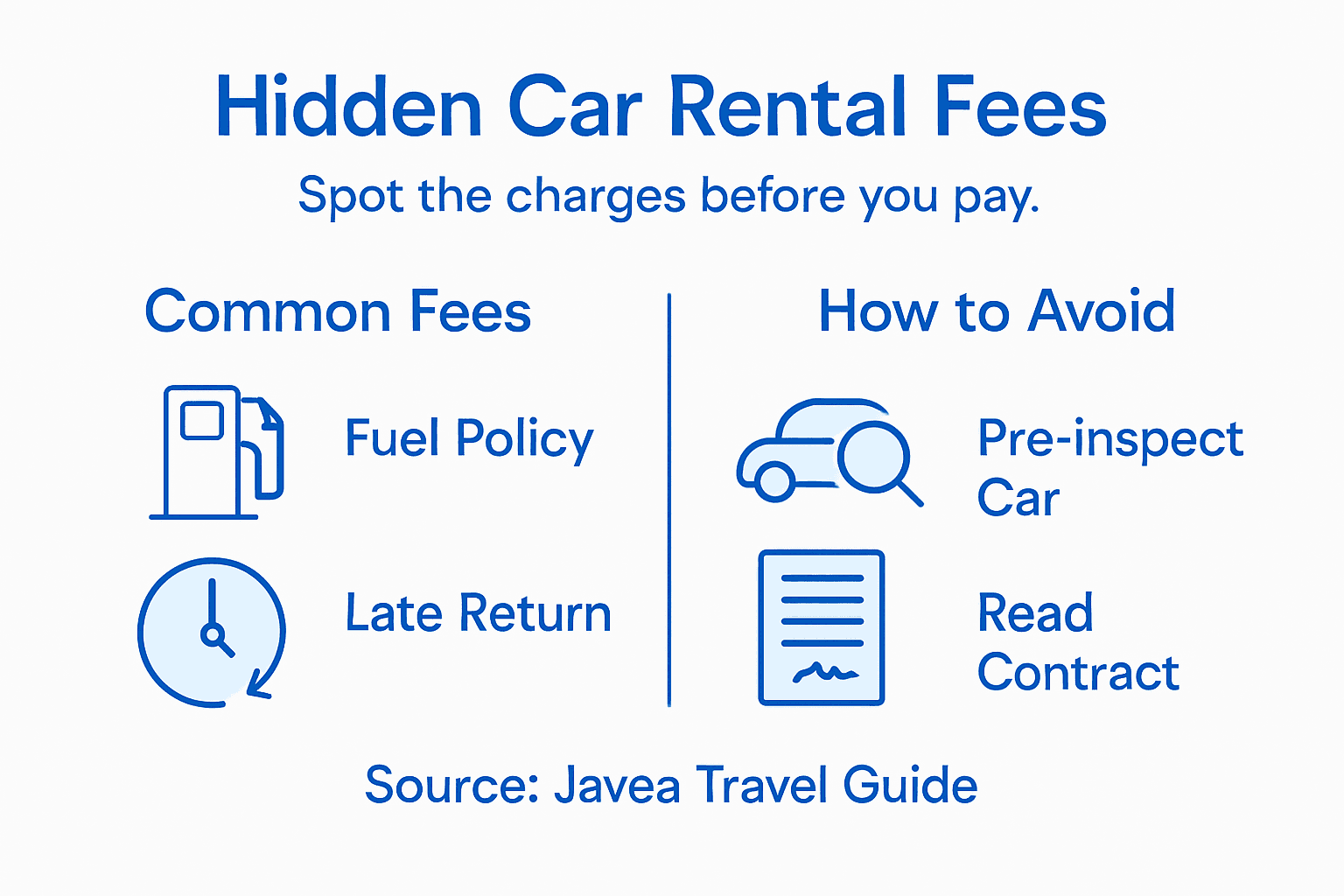
Knowing what fees exist and how to avoid them saves hundreds on your Javea vacation. This section exposes the most common traps and shows exactly how to sidestep them.
Fuel and Refueling Fees
Fuel policy surprises drain wallets faster than any other hidden fee. Rental companies charge premium prices when refueling the car for you, sometimes double what gas stations charge.
Common fuel traps include:
- Pre-paid fuel plans: You pay upfront for a full tank at inflated rates, then return the car empty or with leftover fuel. You lose money on unused gas.
- Rental company refueling charges: Forgetting to refuel before return means they fill it at €1.80-2.50 per liter, plus a €20-40 administrative fee.
- Dirty fuel tank returns: Some companies charge €50-100 if you return the car without filling the tank, regardless of actual fuel costs.
Understanding fuel policies prevents unnecessary charges and ensures you control refueling costs. Always decline pre-paid fuel options and plan to refuel at a regular gas station before returning the vehicle.
Find a gas station near the rental return location and fill the tank 15 minutes before dropoff. This guarantees a full tank without premium charges.
Administrative and Processing Fees
Administrative fees accumulate without being explained clearly at rental pickup. These charges cover toll processing, fine payments, and vehicle inspection administration—costs companies pass to renters.
Common administrative charges:
- Toll processing fees: €3-10 per toll, plus an administrative charge of €5-15. Spanish highways include many tolls; they add up quickly.
- Fine processing fees: If you receive a traffic violation, the company charges €20-50 to process the fine on your behalf, above the actual fine amount.
- Late return fees: Returning the car 30 minutes late costs €25-50. An hour late doubles that charge.
- Cleaning charges: Returning a visibly dirty car triggers €50-150 cleaning fees, even for minor dirt.
- Fuel surcharges: Beyond refueling costs, companies add €10-20 administrative fees when they refuel the car.
Read rental agreements carefully and return vehicles with full fuel tanks and clean conditions to eliminate most administrative charges.
Return the car exactly on time, clean, and with a full fuel tank. These three actions eliminate roughly 80% of hidden fees.
Pickup Location and Airport Surcharges
Airport rental locations charge convenience premiums that city-center locations don’t. A €40 daily rate becomes €52 daily simply because the location is at the airport.
Location fees to watch for:
- Airport facility charges: €5-15 daily surcharge for airport location.
- Delivery fees: Having the car delivered to your hotel adds €25-75 regardless of distance.
- Young driver surcharges: Airport locations often charge higher young driver fees (€20-30 daily) than city locations (€15-20 daily).
- After-hours pickup charges: Picking up outside business hours costs €20-50 extra.
Book rentals from city-center locations like Javea town when possible. You’ll save significantly on location surcharges while gaining easier parking for exploring the area.
Here’s a summary of the most frequent hidden fees and simple ways to avoid them:
| Hidden Fee Type | Typical Range | How to Avoid |
|---|---|---|
| Pre-paid fuel | €30-70 per rental | Refuel yourself before return |
| Toll/fine processing | €5-50 each incident | Pay directly when possible |
| Cleaning charges | €50-150 per incident | Return car clean and tidy |
| Late return surcharge | €25-100 per hour | Return on time, check hours |
| Airport location fee | €5-15 per day | Book city-center pickup |
Damage Charges and Deductibles
Understanding deductibles prevents financial shock when minor damage occurs. A €2,000 deductible means you pay up to €2,000 for any damage claim, regardless of actual repair costs.
Key damage-related fees:
- High deductibles: Standard deductibles range €800-2,500. Lower deductibles cost more daily but reduce personal liability.
- Windshield and tire damage: Often charged separately at €300-800, even if covered by insurance.
- Interior stains: €100-300 for stains you can’t explain or prove existed before rental.
Pro tip: Take photos of the fuel gauge, odometer, and overall vehicle condition immediately after pickup, then email them to the rental company within 30 minutes. This timestamped evidence prevents fraudulent damage claims and eliminates disputes about pre-existing damage.
Protect Your Wallet and Peace of Mind with Natalies Rent a Car
Avoiding hidden fees and unexpected charges is the real challenge every traveler faces before renting a car. This article highlights crucial steps like thorough vehicle inspection, understanding rental agreement terms, and insurance clarity to prevent costly surprises. At Natalies Rent a Car, a family owned company in Javea Alicante Spain, we share your goal of transparent rentals and focus on honest pricing, clear fuel policies, and no hidden charges. We make reading fine print unnecessary because we provide upfront details and support throughout your rental experience.
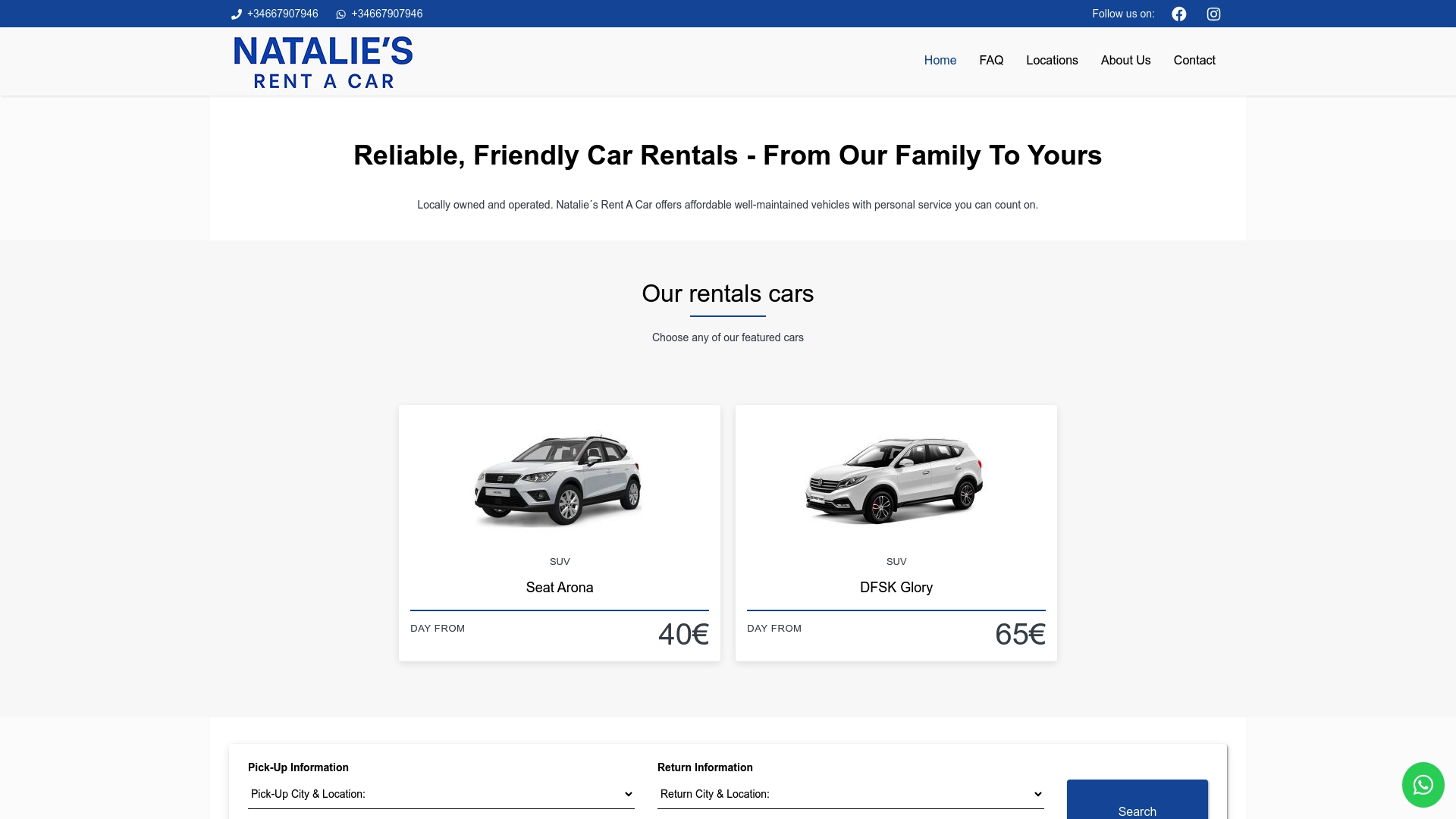
Take control of your rental journey by choosing a company that prioritizes your trust and financial safety. Explore our tailored offers at Offers – Natalies and discover reliable vehicles without confusing terms in Uncategorized – NataliesRentaCar-Reliable Cars. Honest Prices. Visit https://nataliesrentacar.com now to book your worry-free car rental in Spain and safeguard your next getaway.
Frequently Asked Questions
What should I check during a pre-rental car inspection?
Start with the exterior and work inward, checking for body damage, glass condition, tire health, interior cleanliness, and overall vehicle condition. Document any existing damage with photos.
How can I protect myself from hidden fees when renting a car?
To avoid hidden fees, carefully read the rental agreement, confirm the fuel policy, return the car clean and on time, and ensure you understand any additional charges for mileage or insurance.
What documentation do I need to rent a car?
You will typically need a valid passport, domestic driver’s license, International Driving Permit (if required), a credit card in your name for the security deposit, and sometimes proof of address to rent a car.
What insurance options should I consider when renting a car?
Consider Collision Damage Waiver (CDW), Supplemental Liability Insurance, and Personal Accident Insurance. Review your existing coverage through credit cards or personal auto insurance to avoid unnecessary duplicates.